Page Contents


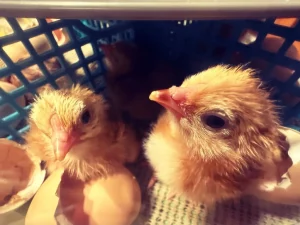
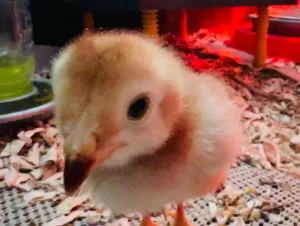
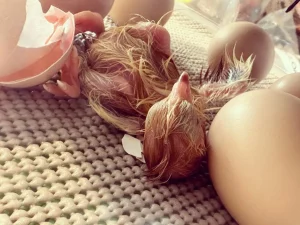
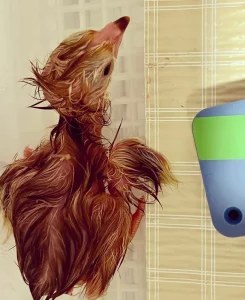





History & Genetics Overview
Buckeyes are a distinctly American chicken breed developed in Ohio in the late 1800s, with a clear practical goal: a cold-hardy, dual-purpose farm bird that could forage, raise chicks, and stay productive in real Midwest conditions.
The breed is credited to Mrs. Nettie Metcalf of Warren, Ohio. Buckeyes are widely recognized as the only APA-recognized chicken breed developed entirely by a woman.
In the early years, the birds were sometimes referred to as Pea Combed Rhode Island Reds. In 1902, Mrs. Metcalf exhibited them as Buckeyes, and the name stuck.
Buckeyes were admitted to the American Poultry Association Standard of Perfection in 1905 and remain a single, Standard-defined variety.
As industrial poultry systems expanded, Buckeyes declined sharply. They survived because small-scale breeders continued selecting them for real farm usefulness rather than commercial efficiency.
Buckeyes are considered a heritage conservation breed and are monitored by The Livestock Conservancy (formerly ALBC) due to their limited population and reliance on active preservation breeding. Unlike commercial hybrids, Buckeyes persist only because breeders intentionally maintain them for function, genetic diversity, and long-term viability.
Conservation breeding does not mean freezing a breed in time. It means selecting carefully so Buckeyes remain healthy, productive, and true to type without creating genetic bottlenecks.
Mrs. Metcalf’s foundation birds were created through practical crossbreeding with heavy selection pressure. Commonly cited early crosses include a Buff Cochin male on Barred Plymouth Rock females, followed by the introduction of a Black-Breasted Red Game male to refine utility traits and increase alertness.
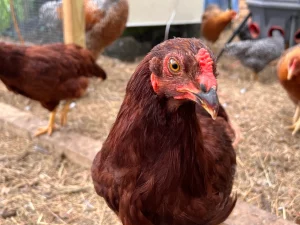
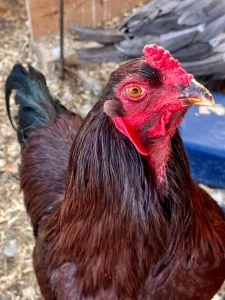
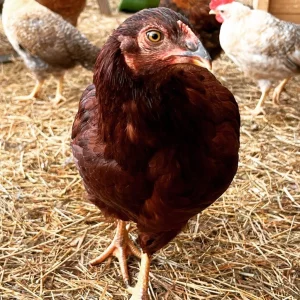
From those foundations, she selected forward toward a hardy red farm chicken with a pea comb. The result was a bird with rich mahogany color, a black tail, a compact but substantial body, and the ability to thrive in harsh Midwestern winters.
Buckeyes were developed as a true dual-purpose breed, valued for meat, eggs, and overall farm usefulness. Selection emphasized balance rather than extremes, favoring birds that could forage well, brood reliably, and lay steady brown eggs for household use.
Because Buckeyes were never heavily shaped by industrial systems, they remained primarily in the hands of small farms and preservation breeders. That history explains why modern Buckeyes still show variation depending on breeding goals.
 Simple Logic: The Old Pickup Truck
Think of a commercial hybrid chicken (like an ISA Brown) like a Sports Car. It goes incredibly fast (lays huge numbers of eggs) but might break down or wear out quickly.
A heritage Buckeye is like an old Pickup Truck. It doesn’t go 200mph. But it starts every morning in the snow, hauls heavy loads, and runs for 20 years. We breed Pickup Trucks.
 Simple Logic: The T-Rex
Most chickens peck at grass and eat bugs. Buckeyes are a little more… intense.
They are famous for being excellent “mousers.” They actively hunt mice in the barn just like a barn cat would.
Think of them as tiny, feathery Velociraptors: very nice to humans, but terrible news for any mouse trying to steal their food.
Buckeyes are recognized by the APA in both Large Fowl and Bantam forms. This distinction matters when discussing size, breeding goals, and preservation history.
Clarification: Throughout this page, unless noted otherwise, we are referring to Large Fowl Buckeyes.
Buckeye “lines” refer to breeding families maintained over time by specific breeders with consistent selection goals. These lines matter because Buckeyes survived through intentional preservation, not mass production.
The Lay line is commonly referenced in preservation circles as a utility-focused foundation, with emphasis on maintaining correct Buckeye type while improving consistency and productivity. In practice, “Lay line” usually signals birds selected to stay useful on a farm, not just look good in a cage.
The Shumaker line is often mentioned alongside Lay stock and is remembered by many breeders for strong Buckeye character: rich mahogany color, solid feather quality, and birds that look and act like practical, alert farm chickens.
Our Buckeye line traces back to birds from Bill Dyke (retired in 2021). Dyke’s program started with Lay and Shumaker stock, and his birds are frequently remembered by other breeders as being especially approachable and people-oriented. That temperament is something we actively value and aim to preserve.
When someone says their birds are “Lay line” or “Shumaker line,” treat it like a clue, not a guarantee. Lines are only as real as the breeder’s selection. Ask what they prioritize: temperament, utility, Standard type, or primarily show traits.
Variety: Buckeyes are a single APA-recognized variety, so “more colors” does not mean “better Buckeyes.” Consistency of type matters.
Comb: Buckeyes have a pea comb. This is part of correct breed type and helps reduce frostbite risk compared to larger combs.
Skin and legs: Correct Buckeyes have yellow skin and yellow legs. Off-leg color can show up in some lines and is typically selected against in Standard-focused breeding.
Plumage: Buckeyes are a black-tailed red breed with rich mahogany body color. Many heritage references also note a slate-toned bar in the undercolor (fluff) on the back.
Temperament has a genetic component. Selecting breeding stock that behaves calmly and confidently in real flock conditions matters as much as physical traits.
Buckeyes are a large fowl, dual-purpose breed. Standard weights commonly referenced are about 9 lb for roosters and 6.5 lb for hens.
In cold climates, the pea comb matters. It is one of the reasons Buckeyes are such a practical winter breed when you want birds that keep doing their job through cold snaps without constant babysitting.
If you are shopping Buckeyes, you will see a range of type depending on what a breeder selects for. Our preference is always birds that stay true to Buckeye function: correct scale, strong body, active foraging, and the kind of temperament that makes them enjoyable to live with.
Buckeyes are often compared to Rhode Island Reds, and at a glance the similarity makes sense. Both are American breeds with red plumage and a long history as practical farm chickens.
 Simple Logic: The Name Tag
Imagine two red hens. How do you tell them apart?
Buckeyes were developed in Ohio with cold weather and farm usefulness in mind. They are known for pea combs, strong foraging drive, and a compact, useful build for a heritage dual-purpose bird.
Rhode Island Reds started as a dual-purpose breed too, but over time they split into very different types depending on the line. Some heritage Reds remain true farm birds, while many hatchery Reds reflect production-focused selection that can differ a lot from preservation lines.
They are both red American chickens, but they are built for different jobs. Here is how to tell them apart:
| Feature | Buckeye (Heritage) | Rhode Island Red (Production) |
|---|---|---|
| Comb Type | Pea Comb (Small, freeze-resistant) | Single Comb (Large, upright spikes) |
| Body Shape | Slanted, muscular, “Game bird” shape | Rectangular, “Brick” shape |
| Personality | Active hunter (Mouser), curious | High-production, can be aggressive |
| Winter Hardiness | Extreme (Built for Ohio winters) | Moderate (Comb prone to frostbite) |
The Bottom Line: If you need maximum egg volume above all else, the Rhode Island Red is the production winner. But if you want a cold-hardy forager that actively hunts its own lunch and greets you at the gate without aggression, you want the Buckeye.
Yes. They were developed in Ohio, and their pea combs help reduce frostbite risk in cold, windy conditions.
They are typically described as moderate, steady brown egg layers. They are not a commercial output breed, but they are very useful for home eggs when managed well.
Some do. Broodiness is common enough that many flocks can hatch and raise chicks naturally, but it will vary by line and individual hen.
They are considered a heritage conservation breed and are commonly listed on conservation priority resources.
They are active and do best with room to move. They usually tolerate confinement fine if you give them enough space and enrichment, but they really shine when they can forage.
Not special, but good basics matter. For our practical approach to feed, water, housing, and winter care, see our Chick Care & Feeding Guide.
Not sure if Buckeyes are right for you?
