A Partridge Chantecler chicken pecks the grass near a beekeeper holding up a bee-covered frame; trees fill the background.
Established 2021

Welcome to the Home of JKHerdItAll & JKShrunkTheKids

We raise heritage poultry and dairy goats in Mishicot, Wisconsin, with a focus on conservation, performance, and ethical breeding. Our herds include Mini Nubian, Oberhasli, and Guernsey dairy goats, along with rare and threatened poultry breeds raised for health, temperament, and long-term sustainability.

Heritage Poultry

Read our heritage poultry care guides or check what birds we have available now – cold-hardy chickens and geese bred for Wisconsin winters.

Dairy Goats

See how we manage our performance herd in our goat care guides, or find out how to buy your next Mini Nubian, Oberhasli, or Guernsey dairy goat.

About Us: Growing Roots

After years of moving from place to place in the U.S. Navy, Ken met Jess in Illinois. In search of a place to put down roots and turn a shared dream into reality, they relocated together to Mishicot, Wisconsin.

Combining Ken’s background raising horses in East Texas with Jess’ lifelong experience managing a “small zoo” of traditional and exotic pets in the Chicago suburbs, JK Herd It All was born. What began as an idea has grown into an intentional breeding and education project focused on functional, durable animals.

Because we both work full-time professional jobs – Ken in nuclear operations training and Jess as a senior software engineer – our project is built on sustainable, realistic systems designed to work in the real world.

If we’re slow to reply, we’re probably at work, feeding something, fixing something, or chasing something – often all at once.

We Herd It All

Partridge Chantecler Hen

Heritage & Designer Chickens

We raise heritage chicken breeds that are docile, cold-hardy, and excellent foragers, plus a few designer chicken breeds chosen for colorful eggs from blue to deep chocolate brown.

We often have hatching eggs, chicks, pullets, and adult birds from lines bred toward the APA Standard of Perfection per the American Poultry Association ↗, and we work with experienced master breeders to improve type and temperament.

A Self-Blue Ameraucana heritage chicken stands in a grassy yard near a grey goose, flowers, and a wooden shed.

Pilgrim Geese

Pilgrim Geese are an autosexing heritage goose breed listed as Threatened by The Livestock Conservancy ↗ and developed in the Midwest for utility and calm temperaments.

They’re among the quietest and most docile geese (but still not chicken-quiet). We’re involved with waterfowl groups like the International Waterfowl Breeders Association ↗ and may offer goose hatching eggs, goslings, dames, and ganders in spring.

Soaring Heart's Midnight Love & Raindrop

Mini Nubian Dairy Goats

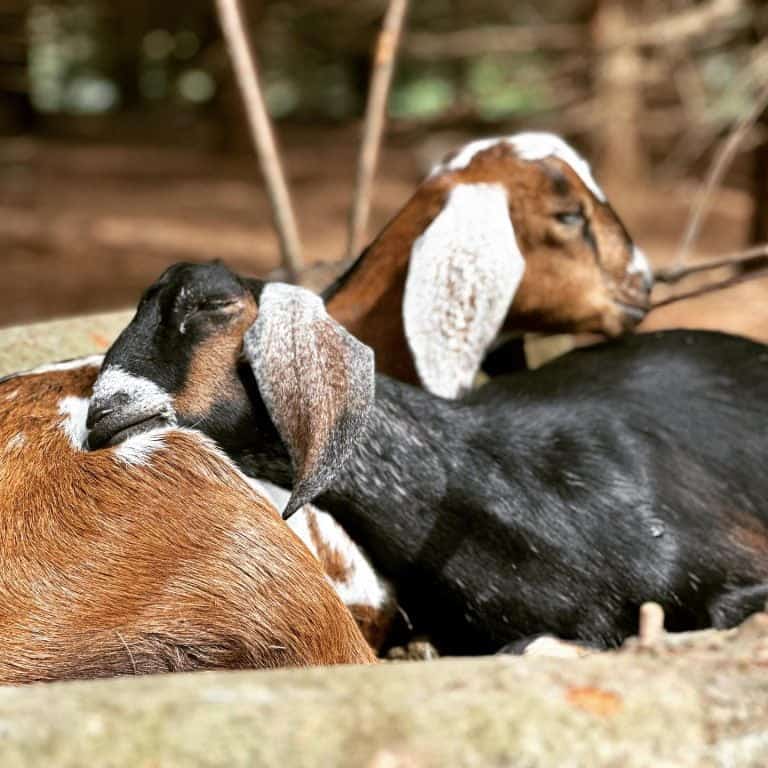
Mini Nubian dairy goats combine nearly the milk volume of Nubian dairy goats with the rich, sweet milk traits of Nigerian Dwarf goats, in an ideal in-between size for practical home dairy use.

Our herd is registered with MDGA ↗ and TMGR ↗ under JKShrunkTheKids. Each spring, we may have Mini Nubian kids and adults from proven Top Ten milking lines, bred for production, sound structure, and steady temperaments well suited for family-scale dairying.

Two brown goats with black markings are lying on a large, round wooden table outdoors. Another goat is partially visible behind them. Sunlight filters through green trees in the blurred background, creating a peaceful, natural scene.

Oberhasli Dairy Goats

Oberhasli dairy goats are Swiss-descended, calm, steady, and quietly confident, producing sweet, clean-tasting milk. They’re also valued as hardy trail packing goats with strong, functional structure.

Our Oberhasli are registered with the American Dairy Goat Association (ADGA) ↗ under JKHerdItAll, and we’re members of the Oberhasli Breeders of America ↗. Spring availability may include American Oberhasli kids and adults from champion-packed pedigrees.

Three light brown goats with short fur are lying close together on a bed of dry hay. Two goats are facing forward with ears perked up, while the third has its head resting down. The background is filled with more straw.

Guernsey Dairy Goats

Guernsey dairy goats are a rare, extremely docile, hardy dairy goat breed from the Isle of Guernsey (not to be confused with Guernsey cattle). Their sweet milk typically falls between Oberhasli and Mini Nubians in butterfat.

Our Guernseys are dual registered with ADGA ↗ and the British Goat Society (BGS) ↗ under JKHerdItAll, and we’re members of Guernsey Goat Breeders of America ↗. We run a structured breed-up program, so spring offerings will vary by stage, from Experimental (IR) to Purebred (BG).

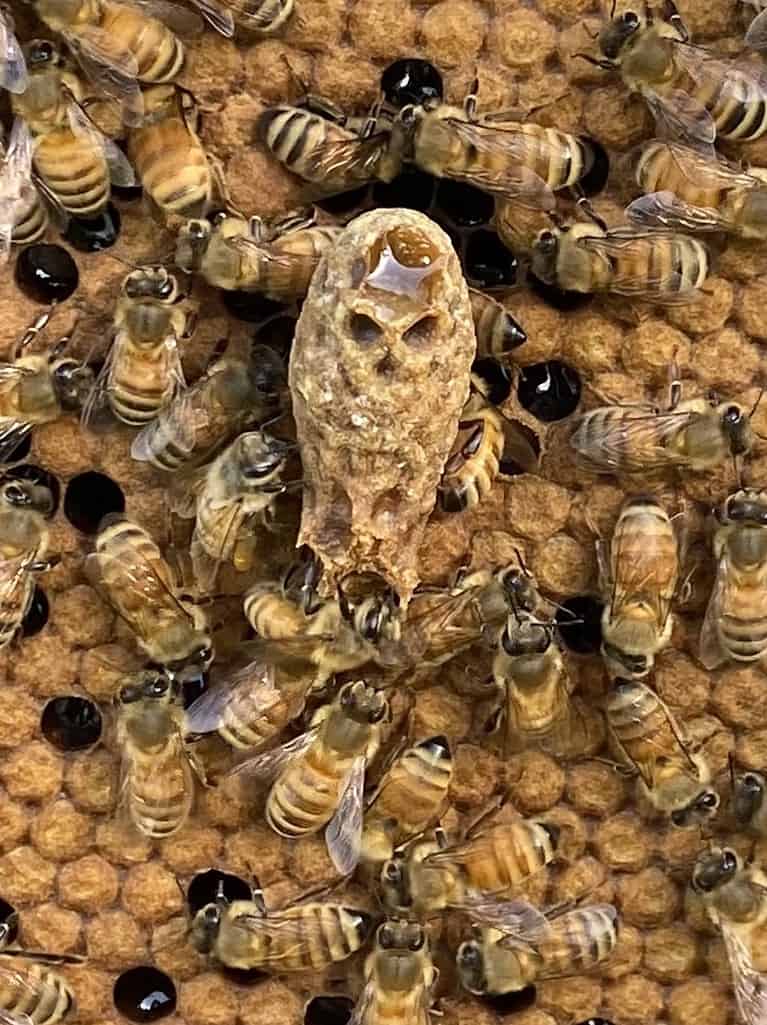
Partridge Chantecler chicken explores near bees clustered on a queen cell, with uncapped cells of dark liquid on honeycomb.

Honey Bees

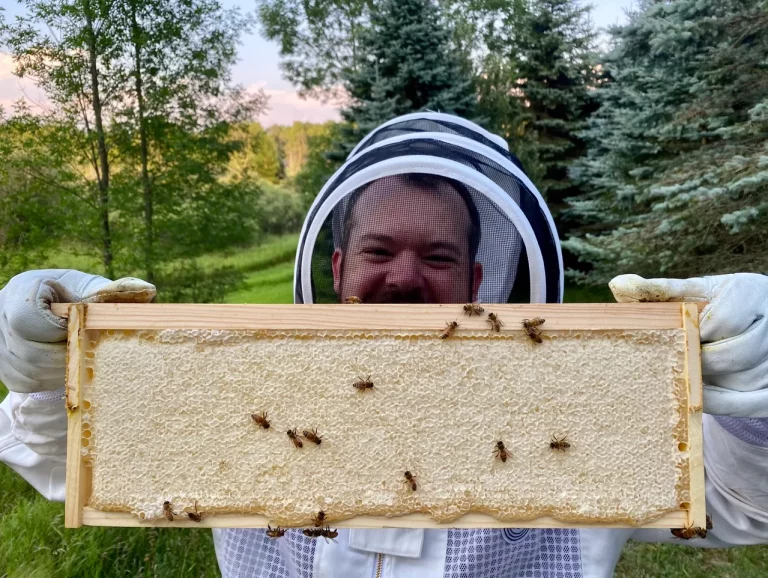
We run Minnesota Hygienic Italian and VSH Wisconsin honey bees, focusing on mite-resistant bees after years of losses to Varroa destructor despite testing and treatment.

We stay connected through Lloyd Street Bees ↗ and the Brown County Beekeepers Association ↗. If you spot a honey bee swarm, reach out – depending on access and equipment, we may assist. Raw local honey and beeswax are seasonal.

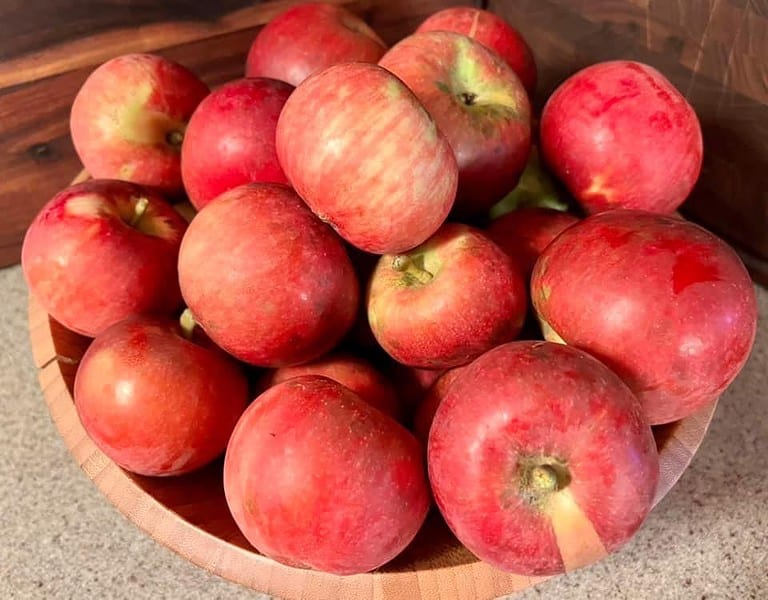
A wooden bowl of red apples sits on a countertop beside a Guernsey dairy goat nibbling hay, framed by a wooden background.

Fresh Produce, Preserves & Ferments

We grow seasonal fresh produce and occasionally offer small-batch preserves and fun ferments when timing and conditions allow, keeping it practical and based on what we actually have growing.

Rather than a farmers market for now, we keep availability for produce, poultry, and eggs in one place through our Farmish storefront ↗, which reflects what we currently have available or expect to have very soon.

Frequently Asked Questions

Do you ship goats, or is it local pickup only?

Goats are sold for local pickup. We meet within 30 minutes of Mishicot, Wisconsin at no charge, typically around Green Bay or Manitowoc, and delivery beyond that area may be available for a per-mile fee. For longer distances, we can point you toward independent livestock transporters - see our Transportation Recommendations page. We are not close enough to an airport to air ship live goats.

Do you ship poultry and hatching eggs?

Yes. We ship hatching eggs on Mondays and Tuesdays to improve delivery timing, and we offer pickup as well. Availability and shipping details are on our poultry sales policies page. We do not maintain a waitlist for birds.

When are kids, goslings, chicks, and hatching eggs available?

Most availability is seasonal and centers on spring. We maintain a waitlist for goat kids from planned breedings, outlined on our goat breeding plans page. Poultry and hatching eggs become available as the hatching season progresses. Current listings are the only reliable guide to what we have - if it is not listed, it is not currently available.

Are your birds NPIP tested?

Yes. We participate in the National Poultry Improvement Plan and complete annual testing for Pullorum-Typhoid and Avian Influenza. Our flock is NPIP Clean #35-0786, and Jess is a Certified Pullorum Tester (#PT-1805).

What is your goat herd health status?

All of our goats originate from herds tested free of the Big Three diseases - CAE, CL, and Johne's - and every goat on our property has tested negative while here. Our full terms are on the goat sales policies page.

What is the difference between Mini Nubian, Oberhasli, and Guernsey milk?

All three give sweet, clean-tasting milk, but butterfat differs. Mini Nubians tend toward the richest, highest-butterfat milk thanks to their Nubian and Nigerian Dwarf background. Oberhasli give sweet, clean milk valued for flavor. Guernsey milk typically falls in between.

What does your Guernsey breed-up program mean for what I can buy?

Guernseys in the United States are still being bred up through generations, so animals carry a stage from Experimental (IR) toward Purebred British Guernsey. Very, very few - literally fewer than 5 females in the US currently - are classified as Royal Golden Guernsey (RGG). What we have available varies by stage from year to year. We explain how this works when you inquire, so you know exactly what generation a given goat is.